
The 5 Best Graphic Design Tools for Small Businesses in 2025
Running a small business means wearing a lot of hats. Graphic design is usually one of them, and the right tools make the difference between scrambling to make something look decent and having a brand that actually holds up across every channel.
The good news: the best graphic design software for small businesses in 2025 is more capable and more affordable than ever. You don't need a design degree or a big budget. You need the right tool for what you're actually trying to do.
Here are the five we recommend — chosen for ease of use, value, and real-world results with small business owners.
| Tool | Best for | Free plan | Starting price |
|---|---|---|---|
|
Canva
Top pick
|
Social, marketing, everyday content | ✓ | $15/mo |
Adobe Express |
Polished branded graphics, fast | ✓ | $9.99/mo |
Figma |
Collaborative design with a dedicated designer | ✓ | $15/mo per editor |
GIMP |
Advanced photo editing with no budget | ✓ | Free only |
Desygner |
Multi-format marketing, team consistency | ✓ | $9.99/mo |
Prices correct as of 2025. All tools offer free plans — paid tiers unlock brand kits, team features, and premium templates.
1. Canva: Best overall for small businesses
Best for: Social media, presentations, flyers, email graphics, everyday content
Pricing: Free plan available. Canva Pro starts at $15/month.
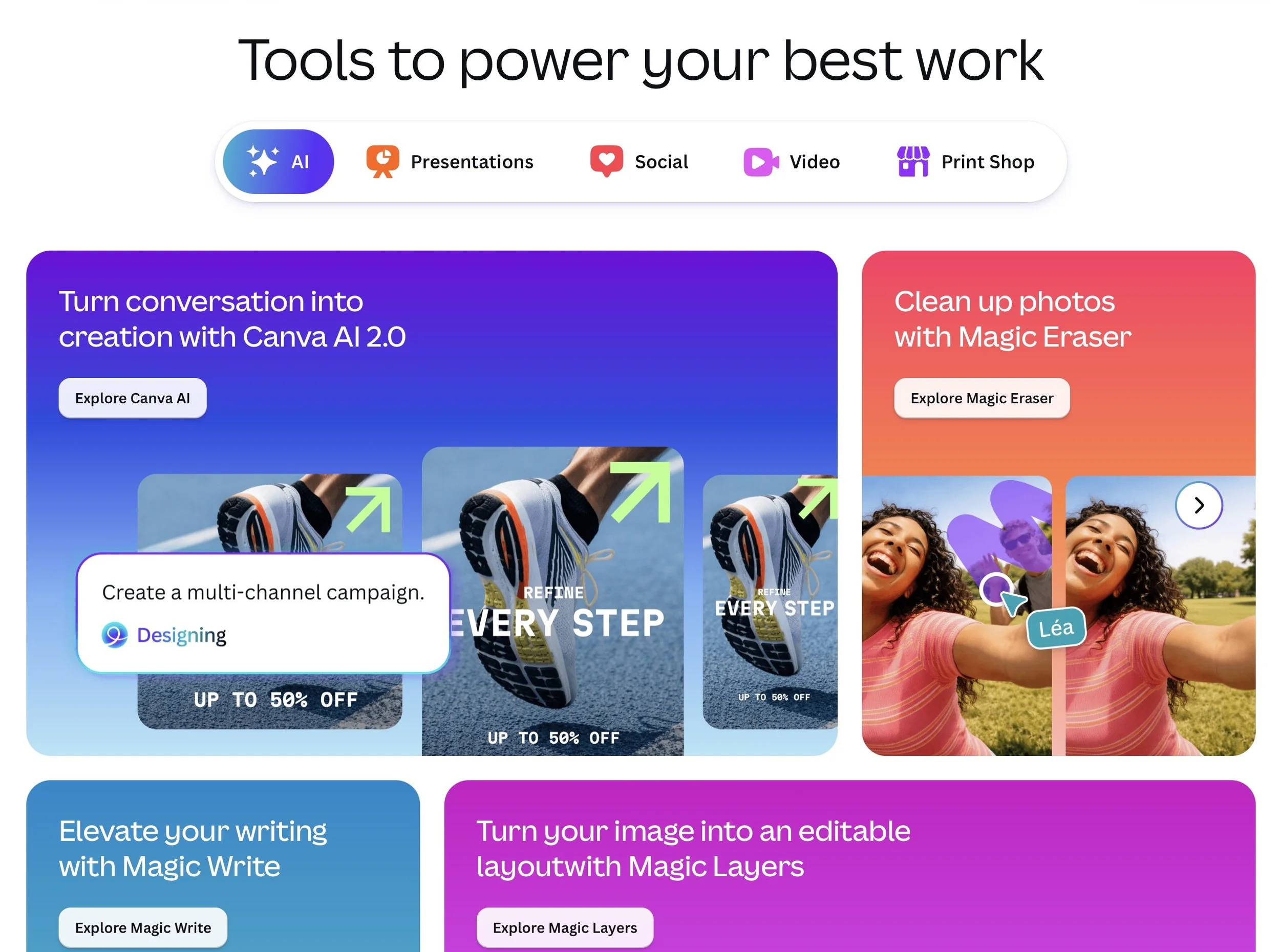
Canva is where most small business owners start — and a lot of them never need to leave. The template library covers virtually every format you'll ever need: Instagram posts, pitch decks, menus, business cards, event flyers. Everything is drag-and-drop, and the learning curve is almost flat.
What makes Canva especially useful for growing businesses is the brand kit feature. Set your colors, fonts, and logo once, and every new design automatically pulls from them. That consistency is what separates a professional-looking brand from a patchwork one.
The free plan is genuinely useful. Canva Pro adds premium templates, background removal, an AI image generator, and team collaboration — worth it once you're producing content regularly.
Worth knowing: Canva's templates are used by millions of businesses. If you use them straight out of the box, your designs won't stand out. The magic is in customizing them to fit your brand — not using them as-is.
2. Adobe Express: Best for polished, on-brand graphics fast
Best for: Marketing graphics, social content, quick-turn branded assets
Pricing: Free plan available. Adobe Express Premium starts at $9.99/month, or included with a Creative Cloud subscription.
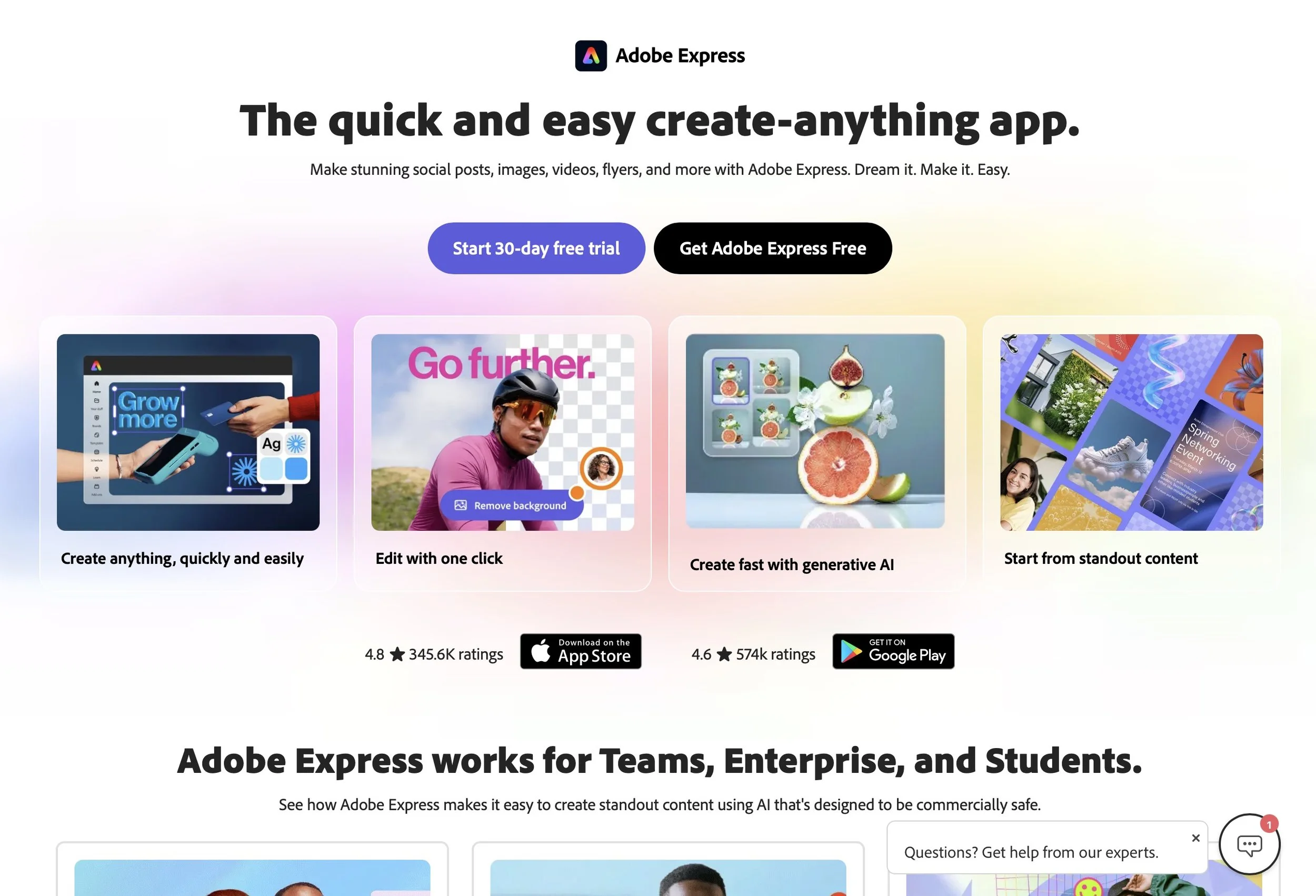
Adobe Express is what you get when Adobe strips Photoshop down to what a small business owner actually needs. Clean templates, intuitive editing, and that characteristic Adobe polish — without the months of learning you'd need for the full suite.
Where Adobe Express pulls ahead of Canva is in output quality. The typography controls are stronger, the export options are more flexible, and if you're already in the Adobe ecosystem (even just Acrobat), the integration is seamless. Branded templates are easy to set up and lock down for team use.
If you're creating a lot of print-quality materials — brochures, signage, product packaging inserts — Adobe Express handles those use cases more cleanly than most alternatives.
Worth knowing: The free plan has limits on premium templates and assets. If you're mainly working with your own photos and brand elements, the free tier goes a long way.
3. Figma: Best for teams with a designer in the mix (Our Favorite)
Best for: Website design, UI mockups, collaborative creative workflows
Pricing: Free plan available (up to 3 projects). Figma Professional starts at $15/month per editor.
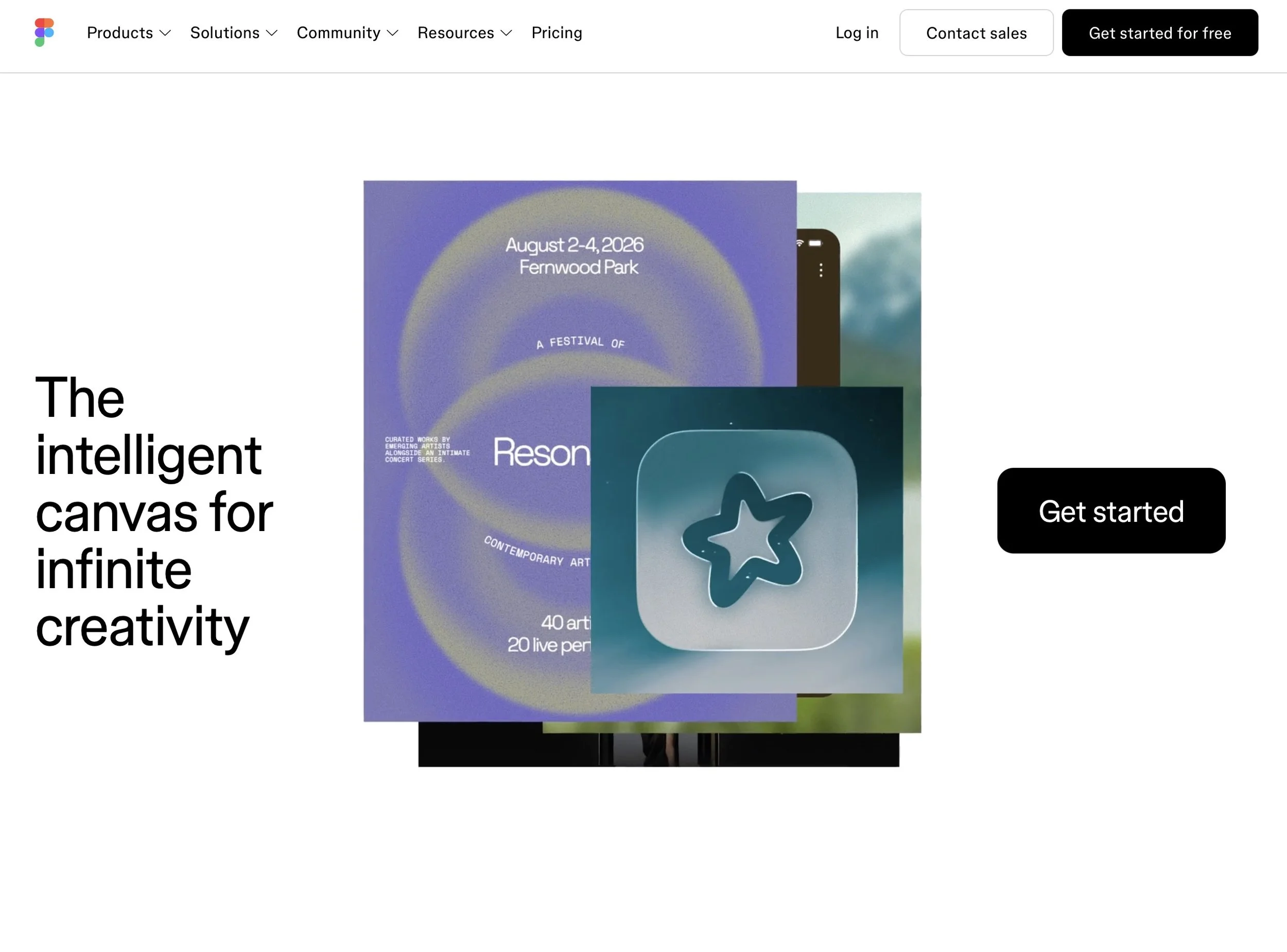
Figma is not a marketing tool — let's be direct about that. It's a professional design application built for designing websites, apps, and interfaces. If you're a solo business owner who wants to make a quick Instagram post, this is not your starting point.
Where Figma shines for small businesses is when you have a designer on your team or work with a design agency. It's the standard tool for professional web design work, and its real-time collaboration means you can review designs, leave comments, and approve changes without a single email attachment. If you're briefing a designer or working with an agency, knowing how to navigate Figma puts you in the driver's seat.
Worth knowing: There's a meaningful learning curve here. If you don't have design experience, budget an hour or two with a tutorial before expecting to produce anything useful.
4. GIMP: Best free option for photo editing
Best for: Advanced photo retouching, image manipulation, businesses with no design budget
Pricing: Completely free, open-source.
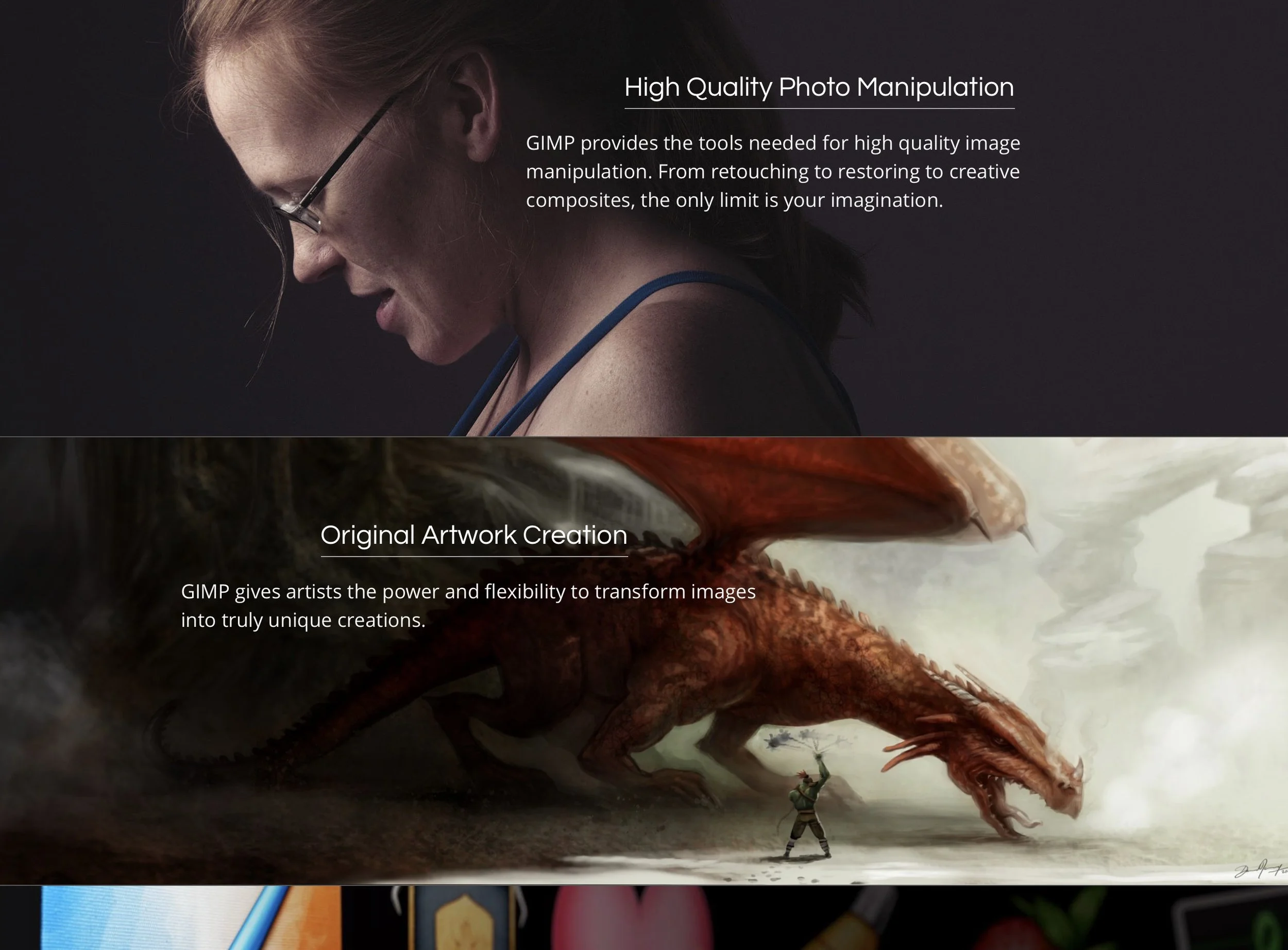
GIMP (GNU Image Manipulation Program) is the most capable free alternative to Photoshop. If you need to remove a background, retouch product photos, or make detailed image edits without paying a monthly subscription, GIMP does the job.
The tradeoff is the interface — it's not intuitive. GIMP was built by and for people with technical design experience, and it shows. If you've never used image editing software before, expect a steep learning curve and plan to spend time with tutorials.
For businesses on a tight budget who need occasional photo editing — not regular content creation — GIMP is a legitimate option. For everyone else, Canva's background removal and basic photo tools will handle 90% of what you need.
Worth knowing: GIMP is desktop-only with no cloud sync or collaboration features. Save often.
5. Desygner: Best for multi-format marketing consistency
Best for: Teams managing multiple content formats, franchise or multi-location businesses
Pricing: Free plan available. Desygner Business starts at $9.99/month.
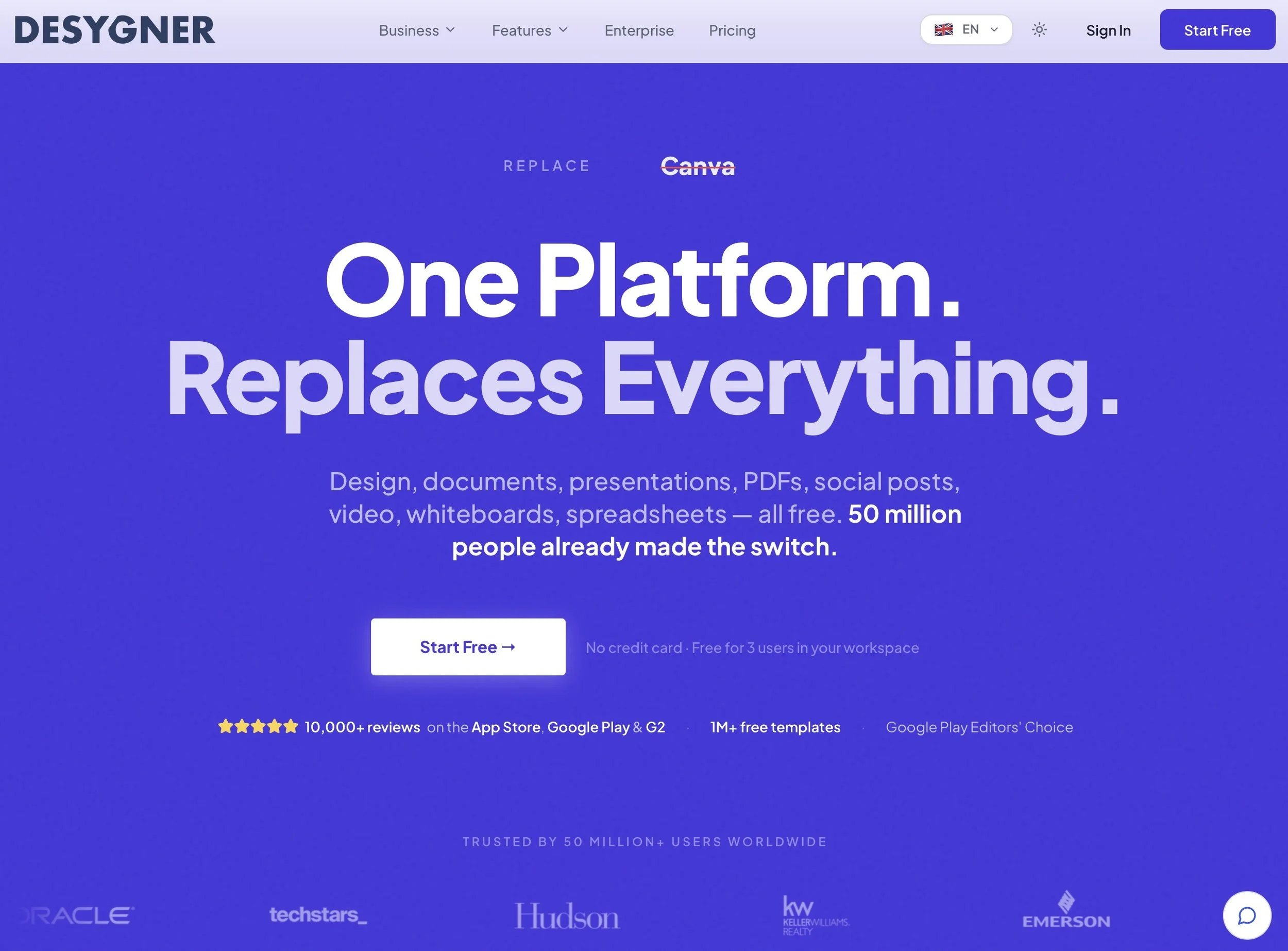
Desygner sits in an interesting middle ground — it's more structured than Canva and built with brand consistency across teams in mind. If you have a few people creating content and need guardrails to keep everything looking like it came from the same brand, Desygner's brand kit and template-locking features are worth a look.
The template library is solid for social, print, and presentation formats. It's not as large or as polished as Canva's, but the business-tier controls — particularly for teams — are strong.
Worth knowing: Desygner is the most niche pick on this list. If you're a solo operator or early-stage business, start with Canva or Adobe Express and only consider Desygner when team consistency becomes an issue.
What to look for in graphic design tools for your small business
Choosing graphic design software or equipment comes down to four things:
Ease of use. If you or your team won't open the tool, it doesn't matter how capable it is. Canva and Adobe Express are the lowest-friction options here.
Template quality. A good template library gets you to a first draft in minutes. The best tools have templates built specifically for business use cases — not just generic layouts.
Brand consistency. Look for tools with brand kit features that store your colors, fonts, and logo. This is what keeps your visual identity consistent across every touchpoint.
Pricing that fits your stage. All five tools here offer free plans. Start free, upgrade when you're creating content frequently enough to feel the limits.
FAQ
What is the best free graphic design tool for small businesses?
Canva's free plan is the strongest starting point — it covers the most use cases without requiring an upgrade. GIMP is a strong free option specifically for photo editing, though it has a steeper learning curve.
What graphic design software do small businesses actually use?
Canva is the most widely used tool among small business owners for day-to-day content. Adobe Express is common among businesses already in the Adobe ecosystem. Figma is the standard for professional web and UI design work.
What graphic design equipment does a small business need?
For most small businesses, the "equipment" is entirely software-based — you don't need specialist hardware. A standard laptop or desktop, a subscription to one of the tools above, and a good stock photo source covers the basics. If you're doing product photography, adding a simple lightbox and a phone tripod makes a significant difference to output quality.
Do I need to hire a designer, or can I use these tools myself?
For everyday content — social posts, email headers, simple flyers — these tools are built to be used without a designer. For anything that directly represents your brand at scale (a website, a logo, a product packaging design), working with a professional is worth it. The tools handle execution; strategy and visual identity are harder to DIY.
Is Canva good enough for professional use?
Yes, with caveats. Canva produces professional-quality output when it's been properly customized to your brand. The risk is leaning on generic templates that look identical to a thousand other businesses. Use it to produce your own brand-specific designs, not to copy templates wholesale.
What's the difference between Canva and Adobe Express?
Both are beginner-friendly design tools with template libraries. Adobe Express has stronger typography and print controls and integrates with the Adobe ecosystem. Canva has a larger template library and slightly lower learning curve. For most small business owners, either works — choose based on whether you're already using Adobe products.
Ready to level up your visuals?
The right graphic design tools give you the foundation. But tools only go so far. If you want a visual identity that actually sets your brand apart, that's where strategy and professional design come in.
Take a look at how we've helped small businesses build brands that stand out, or get in touch if you're ready to make your mark.
Let’s create something amazing (and have a little fun along the way)!